How To Build Your Own Home In Central Scotland: The Complete Guide
Category: Extensions & Structural
Author: Central Scotland Tradesmen
Published: 2026-03-07
Everything you need to know about building your own home in Central Scotland — from finding a plot and securing finance, to choosing between bespoke design and kit homes, and the exact order of tradesmen you'll need from groundworks to completion.
Building your own home is one of the most ambitious and rewarding projects you'll ever take on. In Central Scotland, where stunning landscapes meet practical building challenges, a self-build gives you complete control over where and how you live. But it's also complex — involving planning law, specialist finance, multiple tradesmen, and months of coordination. This guide walks you through every stage, from the first spark of an idea to handing yourself the keys.
Finding and Buying a Plot
Everything starts with land. Central Scotland offers good availability of self-build plots, particularly in semi-rural areas around Stirling, Perth, Falkirk, and Fife. You can find plots through online plot-finding services, local estate agents, auction houses, council-owned land sales, and even agricultural land with development potential.
Before committing to any plot, there are critical checks you must carry out:
- Planning Permission in Principle (PPI): Apply for this before buying. It confirms the site has consent for development. If it's refused, you haven't lost money on land you can't use.
- Utilities access: Can you connect to water, electricity, gas, and sewage? Remote plots may need private water supplies or septic tanks.
- Ground conditions: A ground investigation survey reveals what's beneath the surface — rock, clay, contamination, or poor drainage can dramatically affect foundation costs.
- Road access: Verify legal access to the site and whether you'll need a new driveway or dropped kerb.
- Boundary lines and restrictive covenants: Get these checked by your solicitor before exchange.
Scotland's conveyancing system is typically faster and more definitive than in England and Wales, providing earlier certainty around land ownership — an important factor for lenders.
Planning Permission and Building Warrants
In Scotland, you need two separate approvals before building: planning permission and a building warrant. They cover different things and are applied for separately.
Planning Permission
Planning permission covers what you build and where — the external appearance, how the building fits its surroundings, and whether the development is appropriate for the location. A standard householder application costs £300 and gives you three years to start building from approval. Apply through your local council's planning department.
Building Warrant
A building warrant ensures your construction meets Scottish building regulations covering structural integrity, fire safety, energy efficiency, health and safety, and accessibility. You must have an approved building warrant before starting any building work.
You'll need to submit location plans, elevations, construction details, engineer's calculations, and energy rating calculations. Apply online via eBuildingStandards.scot. A useful tip: you can get a 10% discount on building warrant fees for each aspect certified by an approved certifier.
Important: Building Warrant Fees Increasing
Building warrant fees are set to increase from 1 April 2026 following Scottish Government consultation. If you're planning a self-build, getting your warrant application in before this date could save you money.
Once building work is complete and inspected, the local authority issues a completion certificate confirming compliance with building regulations. Note: this is not a warranty — you'll need separate structural warranty insurance.
Financing Your Self-Build
Self-build mortgages work very differently from standard mortgages. Instead of receiving a lump sum, funds are released in stages as you build. This protects lenders from abandoned projects, but it means you need to plan your cash flow carefully.
How Self-Build Mortgages Work
Most lenders offer a maximum of 80-85% loan-to-value, meaning you'll need a 15-20% deposit. Funds are typically released at five key stages:
- Land purchase (when full planning permission is in place)
- Foundations complete
- Wind and watertight (roof on, windows in)
- Plastered out (electrics, plumbing, joinery complete)
- Completion (kitchen, bathroom, heating installed)
There are two release methods: in arrears (funds released after each stage is completed and inspected — most common) and in advance (funds released before each stage starts — higher interest rates). Many lenders won't release any funds until the building is wind and watertight, so you need substantial upfront capital.
Scotland-Specific Lenders
Scottish Building Society offers self-build loans from £30,000 up to £1,000,000 at 60% LTV, with terms of 5-40 years. They require specialist self-build insurance and professional supervision from an architect. Other options include Mansfield Building Society, Newcastle Building Society, and Ecology Building Society (which specialises in sustainable and modular construction).
Scottish Government Self-Build Loan Fund
If you've been refused mainstream mortgage finance, the Scottish Government's Self-Build Loan Fund (managed by Communities Housing Trust) offers loans up to £175,000 for both urban and rural projects. Visit mygov.scot for details and seek independent financial advice before applying.
Bespoke Design vs Kit Homes
One of the biggest decisions you'll make is whether to go fully bespoke with an architect or choose a kit home. Both have genuine advantages, and the right choice depends on your budget, timeline, and how much design control matters to you.
Bespoke Architectural Design
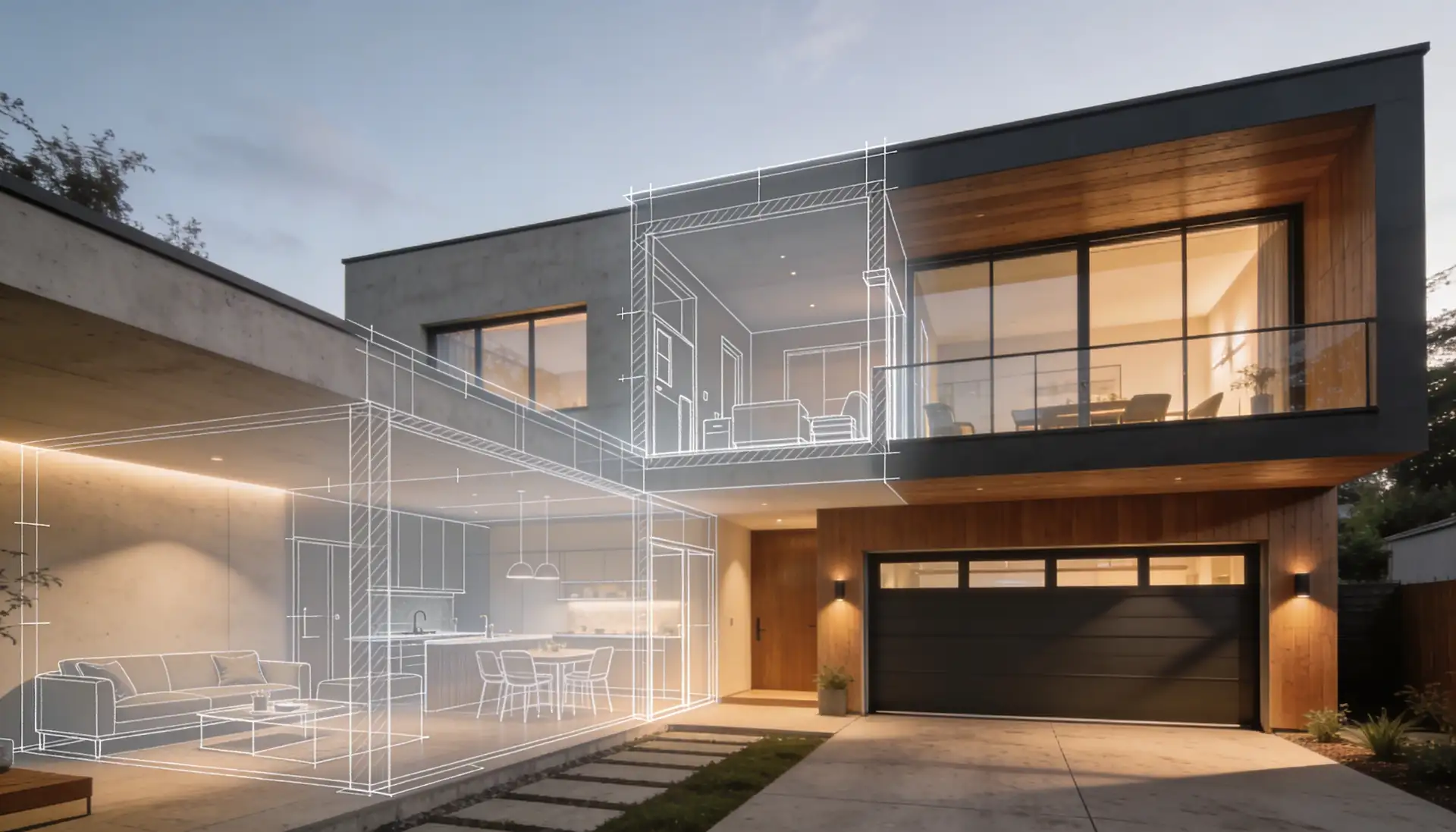
A bespoke build means hiring an architect to design a home completely unique to your needs and site. The design is optimised for your plot — maximising views, sunlight, and land features. You get total creative freedom, but expect to pay £5,000-£15,000+ for full architectural services, and the design and planning process takes longer. Build costs can be higher due to the one-off nature of the construction.
Kit Homes and Timber Frame
Kit homes arrive as pre-manufactured components — typically timber frame panels, roof trusses, and sometimes complete wall cassettes with insulation and services already fitted. They're faster to erect (often watertight in days rather than weeks), costs are more predictable, and energy efficiency is often better out of the box. Kit homes can be 10-25% faster and potentially 10-15% cheaper than fully bespoke builds, though this varies with specification.
The trade-off is less design flexibility. You're working within the supplier's system, and while most offer customisation, you won't have the same blank-canvas freedom. Some mortgage lenders also restrict timber frame properties, so check before committing.
| Factor | Bespoke Design | Kit Home |
|---|---|---|
| Design freedom | Complete | Moderate (customisable) |
| Timeline | 12-18 months | 8-12 months |
| Cost predictability | Lower | Higher |
| Build cost per m² | £1,800-£2,800+ | £1,400-£2,200 |
| Energy efficiency | Depends on spec | Often excellent |
| Mortgage restrictions | Few | Some lenders restrict |
The Order of Work: From Groundworks to Completion
Understanding the construction sequence is essential for planning your budget, coordinating tradesmen, and knowing when mortgage stage payments will be released. Here's the typical build sequence for a Central Scotland self-build:
Stage 1: Site Preparation and Groundworks (2-4 weeks)
Your groundworks contractor handles site access, temporary fencing, site strip and level, services trenches, drainage installation, and foundation excavation. In Central Scotland, ground conditions vary enormously — solid rock in parts of Stirling, heavy clay around Falkirk, and variable conditions across Fife. A thorough ground investigation before you start saves nasty surprises.
Stage 2: Foundations (1-2 weeks)
Concrete foundations are poured, foundation walls built, and the damp proof course (DPC) installed. Building control will inspect at this stage. This is your first mortgage release point with most lenders.
Stage 3: Superstructure (2-4 weeks)
The ground floor slab goes down, walls rise to first floor level, upper floor structures are built, and the roof structure goes on — either pre-fabricated trusses or a traditional cut roof. If you've chosen a kit home, this stage is dramatically faster as pre-manufactured panels are craned into position.
Stage 4: Wind and Watertight (2-3 weeks)
The roof covering goes on (tiles or slate), windows and external doors are installed, and the building is weatherproofed. This is a critical milestone — many mortgage lenders won't release any funds until this point is reached. In Central Scotland's climate, getting to this stage before autumn is ideal.
Stage 5: First Fix (3-4 weeks)
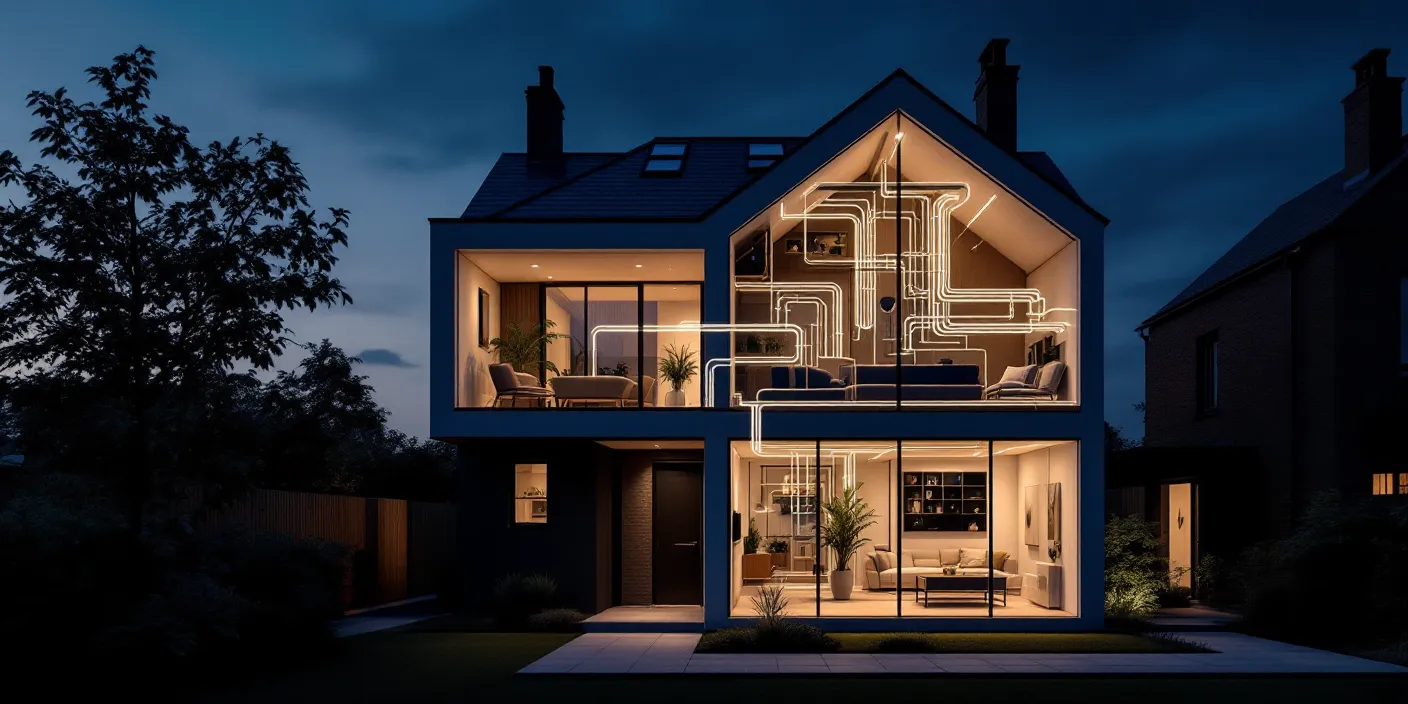
The internal trades begin. Plumbers run pipes and waste, electricians pull cables and fit back boxes, heating systems are installed, insulation goes in, stud walls are erected, and the staircase is fitted. Everything that needs to be hidden behind walls and under floors happens now.
Stage 6: Plastering (2-3 weeks)
Plasterboard goes up on walls and ceilings, followed by a skim coat. Allow proper drying time — rushing this stage causes cracking and paint failure later. Central Scotland's damp climate means you may need dehumidifiers to speed drying.
Stage 7: Second Fix (3-4 weeks)
The finishing trades move in. Electricians fit switches, sockets, and light fittings. Plumbers install sanitaryware, taps, and showers. The kitchen is fitted, bathrooms completed, internal doors hung, skirting and architrave fixed, and tiling done.
Stage 8: Decoration and External Works (2-4 weeks)
Internal painting and decorating, external render or cladding completion, driveway and paths, landscaping, and final cleaning. This is where your house starts to feel like a home.
Stage 9: Completion and Sign-Off (1-2 weeks)
Building control carries out a final inspection, you do a thorough snagging check (documenting any defects), the completion certificate is issued, utility connections are finalised, and you move in. Total timeline: typically 8-14 months for a standard family home.
The Order of Tradesmen You'll Need
Getting tradesmen in the right order is one of the most important aspects of managing a self-build. Book the wrong trade too early and they'll be standing around waiting; book them too late and your entire programme slips.
| Phase | Tradesmen Needed | Typical Duration |
|---|---|---|
| Groundworks | Groundworks contractor, concrete supplier | 3-6 weeks |
| Structure | Bricklayers/blocklayers or timber frame erectors, scaffolders, carpenters, roofers, window fitters | 4-7 weeks |
| First Fix | Plumbers, electricians, heating engineers, insulation installers | 3-4 weeks |
| Dry Lining | Carpenters (stud walls), plasterers | 2-3 weeks |
| Second Fix | Electricians, plumbers, kitchen fitters, bathroom fitters, tilers, carpenters (doors, skirting), flooring specialists | 3-4 weeks |
| Finishing | Painters/decorators, driveway contractors, landscapers | 2-4 weeks |
Project Management Options
You have four main options for managing your build:
- Main contractor: A single company coordinates all trades and manages the entire build. Higher cost but significantly less stress.
- Separate contractors: You hire individual tradespeople for each phase. Lower cost, but requires careful coordination and construction knowledge.
- Architect as project manager: Some architects offer project management as part of their services.
- Professional project manager: A dedicated PM coordinates the build while you make the decisions.
Checking Trade Credentials
Always verify that tradesmen hold the right certifications. In Scotland, look for SELECT-registered electricians, SNIPEF-registered plumbers, Gas Safe registered heating engineers, and NFRC-approved roofers. Use pre-made contracts from the Scottish Building Contracts Committee website, and get legal advice from a solicitor before signing any contract.
What It All Costs
Self-build costs in Central Scotland vary hugely depending on location, specification, and design approach. Here are realistic 2026 figures:
| Cost Category | Typical Range |
|---|---|
| Plot (Central Scotland) | £30,000 - £200,000+ |
| Build cost per m² (budget) | £1,200 - £1,500 |
| Build cost per m² (standard) | £1,500 - £2,000 |
| Build cost per m² (high spec) | £2,000 - £2,800+ |
| Architect fees | £5,000 - £20,000+ |
| Structural engineer | £1,500 - £5,000 |
| Planning application | £300 |
| Building warrant | Variable (increasing April 2026) |
| Services connections | £5,000 - £15,000 |
| Driveway | £3,000 - £15,000 |
| Landscaping | £5,000 - £30,000 |
| Self-build insurance (annual) | £1,000 - £3,000 |
| Contingency | 10-15% of total build cost |
Example Budget: 150m² Standard Home
Land: £80,000 | Build cost (£1,800/m²): £270,000 | Professional fees: £15,000 | Services & externals: £20,000 | Contingency (10%): £27,000 | Total: approximately £412,000
Insurance You'll Need
Self-build insurance is not optional — your lender will require it, and building without it is reckless. You'll need:
- Public liability insurance: Covers injury to third parties and damage to neighbouring property. Typically £2-5 million coverage.
- Contract works insurance: Covers the structure itself during construction against fire, storm, flood, theft, and vandalism.
- Employer's liability insurance: A legal requirement if you employ anyone on site.
- Structural warranty: Usually a 10-year warranty required by lenders and future buyers. Apply before starting on site — most providers won't cover retrospectively.
Final Advice
Building your own home in Central Scotland is entirely achievable — thousands of people do it every year across Scotland. The keys to success are thorough planning, realistic budgeting (with a genuine 10-15% contingency), and choosing the right tradesmen for each stage. Don't rush the design phase, don't skip the ground investigation, and don't underestimate how long mortgage applications take (5-6 months is common for self-build).
Whether you choose a bespoke design that makes the most of a hillside plot overlooking the Ochils, or a high-performance timber frame kit home on a serviced plot in Fife, the result is a home built exactly to your specification, in a part of Scotland that offers an outstanding quality of life.
Find Tradesmen for Your Self-Build
Central Scotland Tradesmen lists verified contractors across every trade you'll need for a self-build — from groundworks and roofing to plumbing, electrical, plastering, and joinery. Browse our categories to find trusted local professionals.